Ruins near Pompeii
The eruption of Mount Vesuvius created ruins near Pompeii that can be visited today to discover their historical and archaeological importance. Find out which ones they are and how you can reach them.
The eruption that changed everything
When Mount Vesuvius erupted in 79 AD, it didn’t just destroy Pompeii, it preserved an entire region in volcanic ash and mud. While Pompeii gets all the fame, you’re missing out if you skip the other archaeological sites scattered around the Bay of Naples, each telling a different part of this ancient tragedy.
The eruption unfolded in two distinct phases. These two phases explain all the differential preservation in the ruins near Pompeii:
Phase 1: The Plinian Phase (The Ash Rain)
On the first day, around 1:00 PM, Mount Vesuvius erupted. A colossal column of gas, ash, and pumice (lapilli) shoots more than 20 miles (32 km) high, looking like a “pine tree,” as described by eyewitness Pliny the Younger.
During the afternoon and night (18-20 hours later), prevailing winds blow the eruptive column southeast. This column begins “raining” its contents. Pompeii and Stabiae (both southeast) are covered by a constant rain of light pumice and ash lasting for hours. This accumulates up to 5 meters deep. It wasn’t instantly lethal, and people had time to flee. The main danger comes from roof collapses under the weight of accumulated ash.
Herculaneum’s fate? Being located to the west, it was upwind of the ash cloud. It received almost nothing from this initial rainfall.
Phase 2: The Pyroclastic Surges (The Inferno)
The following day, around 1:00 AM, the eruptive column of Mount Vesuvius lost pressure and collapsed, generating a series of pyroclastic surges.
- Surge 1 (1:00 a.m.): A fast-moving cloud of superheated gas and volcanic ash, with temperatures between approximately 300 and 500 °C and traveling at speeds exceeding 100 km/h, swept down the slopes of the volcano. Because of its proximity and direct exposure, Herculaneum was struck first. The impact caused instantaneous death due to extreme thermal shock, including among the more than 300 people sheltering in the seaside boathouses. The surge rapidly filled the town, burying it under dense pyroclastic deposits that later hardened over time.
- Surges 2–6 (1:00–8:00 a.m.): Several additional pyroclastic surges followed throughout the early morning hours. While some were highly destructive, the later surges were cooler but still lethal. These surges eventually reached Pompeii at dawn, overtopping the city walls. They killed the remaining inhabitants primarily through a combination of ash inhalation, toxic gases, and intense heat, bringing the eruption’s final and most deadly phase to Pompeii.
What are the ruins near Pompeii?
What are the ruins near Pompeii?
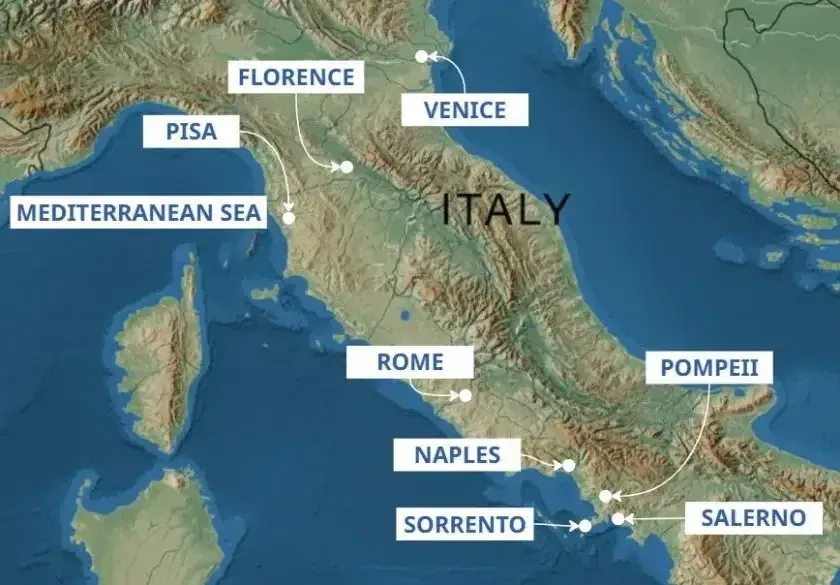
The surroundings of Mount Vesuvius are home to archaeological treasures that offer a much more intimate and luxurious glimpse into ancient Rome. Herculaneum, for instance, is a must-see due to its astonishing state of preservation, where carbonized wooden structures and two-story buildings can still be admired.
If you are looking to witness the opulence of the elite, the Villa of Poppaea in Oplontis dazzles with its imperial dimensions and vibrant frescoes, while the Villas of Stabiae allow you to wander through ancient leisure residences perched on cliffs with panoramic views of the bay. Finally, for a more practical and rural perspective, Boscoreale and its Villa Regina offer a unique window into the wine production and agricultural life that sustained these cities before the catastrophe of 79 AD.
Pompeii vs. Herculaneum: Which one should you choose?
Think of it this way: Pompeii shows you how Romans lived publicly; Herculaneum shows you how they lived privately. If you still can’t decide which of the two to visit, here are their main differences:
| Destination | Pompeii |
|---|---|
| Best for... | Understanding the scale of Roman civic and public life. |
| Estimated Time | 4–6 hours (to scratch the surface) |
| Key Highlights | Vast forum, amphitheater, and the layout of an ancient metropolis. |
| Destination | Herculaneum |
|---|---|
| Best for... | Intimate details, private life, and miraculous preservation. |
| Estimated Time | 2–3 hours |
| Key Highlights | Original furniture, intact upper floors, and actual shade. |
What makes Herculaneum different from Pompeii?
The fundamental difference between Pompeii and Herculaneum lies in how they were destroyed, which completely altered their preservation. Pompeii was buried under a relentless rain of ash and pumice that crushed roofs and allowed air to rot organic materials over centuries, leaving cavities that archaeologists later filled to create the famous plaster casts. In contrast, Herculaneum was hit by pyroclastic surges of superheated gas and mud (400-500°C). This extreme heat instantly carbonized organic materials without oxygen, while the hardening mud created an airtight seal.
Consequently, while Pompeii offers plaster casts, Herculaneum preserves actual multi-story buildings, vivid frescoes, intact wooden furniture, and carbonized food like bread and figs.
Must-see spots in Herculaneum
The first thing you should see are the Thermal Baths, which tell a story about Roman social life and gender segregation. The men’s section was larger and more luxurious, with a complete sequence of rooms ranging from cold to hot. The women’s section, smaller and less decorated, notably lacked a cold bath. Don’t miss the mosaic floor in the women’s changing room, a stunning depiction of Triton surrounded by sea creatures. You can still see the terracotta pipes in the walls that circulated hot air for the underfloor heating system.
On the other hand, we have the House of Neptune and Amphitrite, which belonged to a wealthy merchant. The shop window, a thermopolium or ancient fast food counter, still has wine jugs lined up on the counter. But the most striking feature is the mosaic on the wall of the summer dining room, made not only of stone but also of glass paste that still glows with bright blue and green hues after 2,000 years.
The House of the Wooden Partition preserves something not seen anywhere else: a charred wooden partition that slides on bronze rails. Think of it as the Roman equivalent of a Japanese shoji screen. In Pompeii, this would have rotted away centuries ago.
Finally, there are the Boathouses. These hold the most tragic story of Herculaneum. For years, archaeologists thought that the population had escaped. Then in 1982, they found over 300 skeletons huddled in the beach’s stone boat sheds, waiting desperately for rescue by sea. Forensic analysis reveals they died instantly from thermal shock—the heat vaporized their soft tissues and literally made their skulls explode. Among them: a woman clutching her jewelry, a soldier with his sword, and a mother cradling her child.
Why Herculaneum deserves a spot on your itinerary
Herculaneum often plays second fiddle to its famous neighbor, and that’s exactly what makes it special. While Pompeii attracts millions of tourists annually, Herculaneum offers something different, namely an intimate encounter with Roman life that is almost voyeuristic in its detail.
And let’s be honest, as a Reddit user points out, “Herculaneum is much better preserved than Pompeii, it is much less crowded, and it only takes about 2-3 hours to explore. Definitely worth it.”
Why aren’t more people talking about this place? For centuries, archaeologists believed Herculaneum’s residents had successfully escaped the eruption because so few bodies were found in the excavated town. That theory held until 1982, when excavators reached the ancient shoreline and discovered more than 300 skeletons huddled inside the stone boathouses. These people had fled to the waterfront, desperately hoping for evacuation by sea. They never made it.
Why is Herculaneum not as famous as Pompeii?
Pompeii covers 150 acres of excavated area, it’s a complete Roman city with forums, amphitheaters, and wide streets. But in Herculaneum only 20 acres have been excavated, making it feel more like a wealthy seaside neighborhood than a metropolis.
Then there’s the discovery story. Herculaneum was actually found first, in 1709, but it was buried under more than 20 meters of solid volcanic rock. Early excavation required tunneling by torchlight, an incredibly difficult and often destructive process. Pompeii, discovered later in 1748, lay under a much shallower layer of soft ash and pumice. It was easier to excavate and reveal to the world.
But the real reason for Pompeii’s iconic status came in the 19th century: the plaster casts. When archaeologists developed the technique of filling the body cavities with plaster, they created a visual representation of the tragedy that was morbidly fascinating and utterly unique. Those frozen figures became the “logo” of the Vesuvius eruption, capturing imaginations worldwide. Herculaneum’s skeletons, as scientifically valuable as they are, simply don’t have the same visceral impact.
Oplontis, the villa that might have belonged to Nero's wife
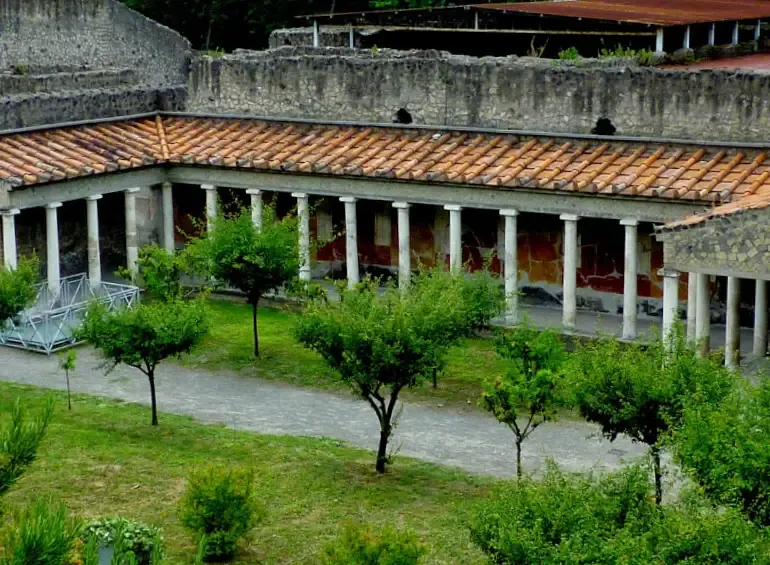
Oplontis, the villa that might have belonged to Nero's wife
Oplontis isn’t a city but the name of an ancient residential area. The main site here is Villa A (popularly known as Villa Poppaea). This isn’t a townhouse but a maritime luxury villa on a truly imperial scale, one of the most sumptuous in the entire Roman world.
Photo: “Oplontis” by Ragusaibla.
Villa Poppaea and its jaw-dropping frescoes
The central narrative of this villa is its connection to Poppaea Sabina, Emperor Nero’s second wife. She was one of the most influential and controversial female figures of the Julio-Claudian dynasty in ancient Rome. Known for her extraordinary beauty and ambition, she was first Nero’s mistress and, after successfully convincing him to divorce his first wife (Octavia), she became his second empress in 62 AD.
While the evidence is circumstantial, it’s compelling. A painted inscription on an amphora (transport jar) found at the site referenced Secundus, a slave or freedman of Poppaea. The sheer opulence of the place, like the use of solid marble columns instead of cheaper painted stucco, strongly suggests imperial ownership. Legal documents discovered in Herculaneum confirm that Poppaea’s family owned businesses (like tile factories) in this area.
Getting to Oplontis from Torre Annunziata
Take the same Circumvesuviana train from Naples toward Sorrento, but get off at “Torre Annunziata – Oplonti“ station. The villa entrance is literally steps from the platform.
The atmosphere here is dramatically different, you might have the entire villa to yourself. Perfect for art lovers and anyone seeking quiet away from the tourist hordes.
Is it worth visiting?
Absolutely, but for a specific purpose. If Pompeii is the city and Herculaneum is the home, Oplontis is the palace. It’s worth visiting for anyone interested in Roman art and experiencing a glimpse of imperial elite luxury that the other sites can’t match.
It’s not just us saying it: many Reddit users also point out that: ‘I went there and the experience was incredible; there was basically no one else there and some of the art is preserved on the walls. It is absolutely stunning.’ Another user notes that ‘it’s crazy how well-preserved it is!‘ and finally, someone mentions that ‘it’s on my bucket list for my honeymoon.’ Great choice!
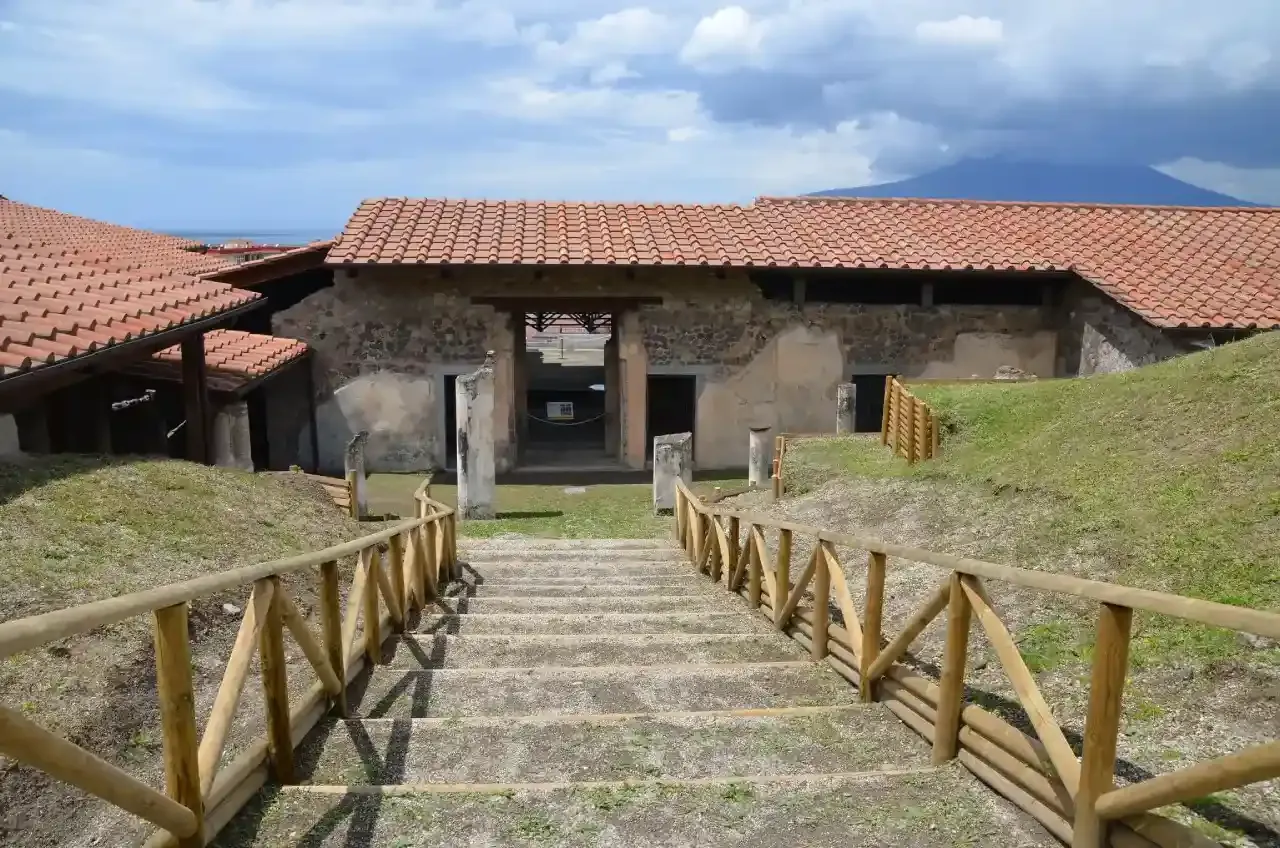
Stabiae or the luxury villas with a view
Stabiae, located in the modern city of Castellammare di Stabia, was an exclusive residential resort. This is where Rome’s elite (senators, generals) built their villae otium (leisure villas), places designed for escaping the political pressures of Rome.
The villas weren’t built on flat land but high on a 50-meter cliff overlooking the Bay of Naples. Why? The view. These panoramic vistas of the bay and Vesuvius were the whole point. The Romans called these villae otium, leisure villas designed purely for relaxation and showing off.
Two main villas are open to visitors:
- Villa Arianna: named for a large mythological fresco of Ariadne.
- Villa San Marco: one of the largest Roman residential villas ever found at over 11,000 square meters.
Photo: “Villa Arianna, Stabiae, Italy” by Carole Raddato.
Why Stabiae feels different?
The atmosphere at Stabiae is completely unique. It’s spacious, panoramic, and remarkably peaceful. It doesn’t feel like an urban excavation but rather like strolling through a series of luxury country estates. Parts of these villas are still being actively excavated, giving you a sense of ongoing discovery.
Can you visit Stabiae?
Yes! And this is one of the best values in the region: Entry to Villa Arianna and Villa San Marco is completely free.
Take the Circumvesuviana line (Naples-Sorrento) to “Via Nocera” stop. From the station, it’s either an uphill walk or a short ride on a local bus.
Boscoreale: Where Romans actually worked
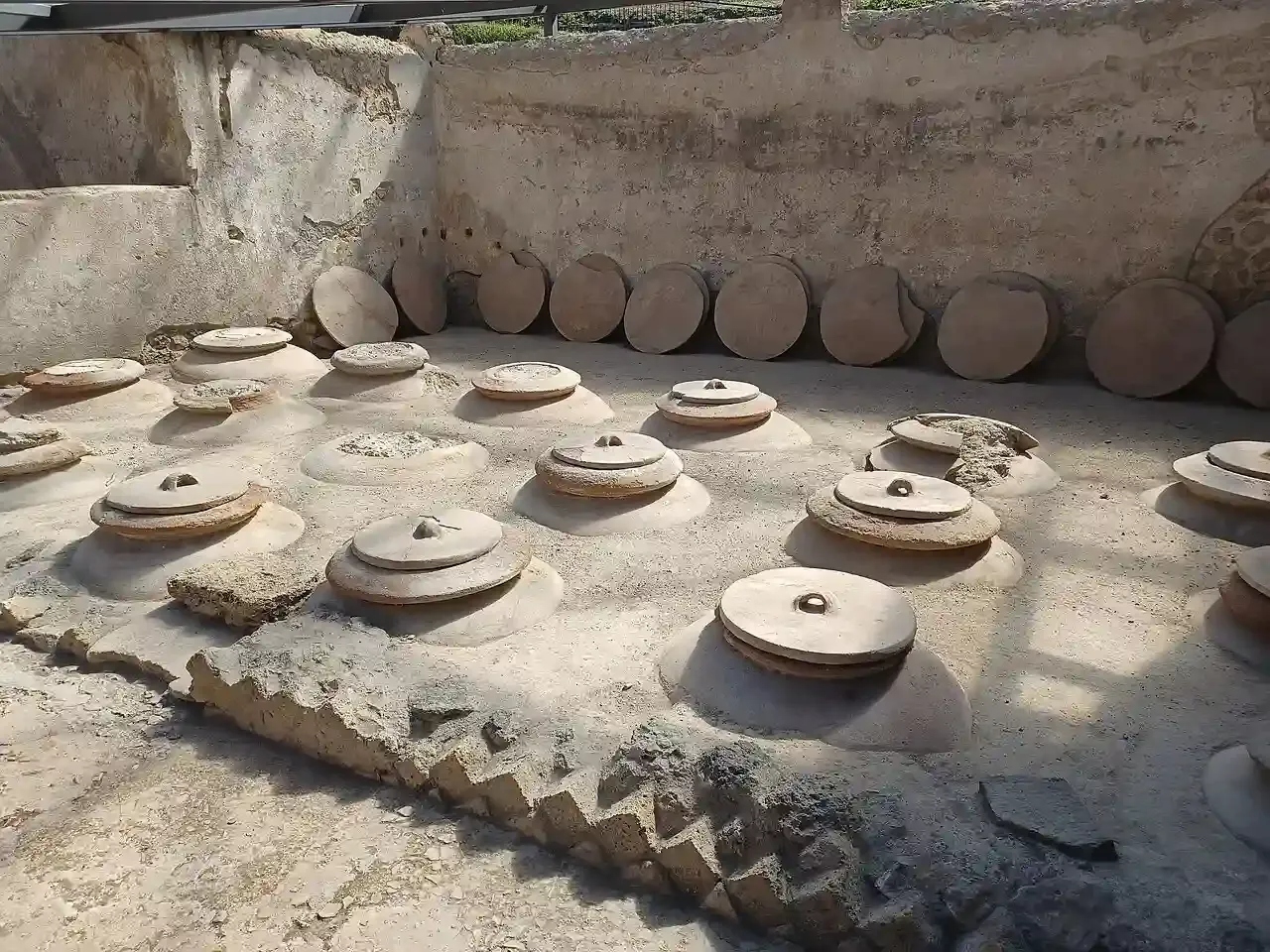
Boscoreale: Where Romans actually worked
Located just north of Pompeii, this agricultural belt was famous for its vineyards, and it still is today. The main site is Villa Regina, not a palace but a working farm dedicated entirely to wine production. The wine press room (torcularium) and wine cellar (cella vinaria) are perfectly preserved.
The cellar contains 18 enormous terracotta jars (dolia) buried in the ground where grape must fermented and aged. In an amazing bit of experimental archaeology, scientists found root casts from the original 79 AD vines and replanted the vineyard exactly as it was, using the same grape varieties.
The real treasure is Boscoreale’s Antiquarium museum. It is an essential museum for understanding the daily life and agricultural economy of the Vesuvius area.
Photo: “View of dolia in situ from the Villa Regina in Boscoreale, Italy” by Carla Brain.
How to get there?
Boscoreale has its own Circumvesuviana stop: “Villa Regina”. The site is right outside the station, couldn’t be easier.
Other ancient sites worth your time
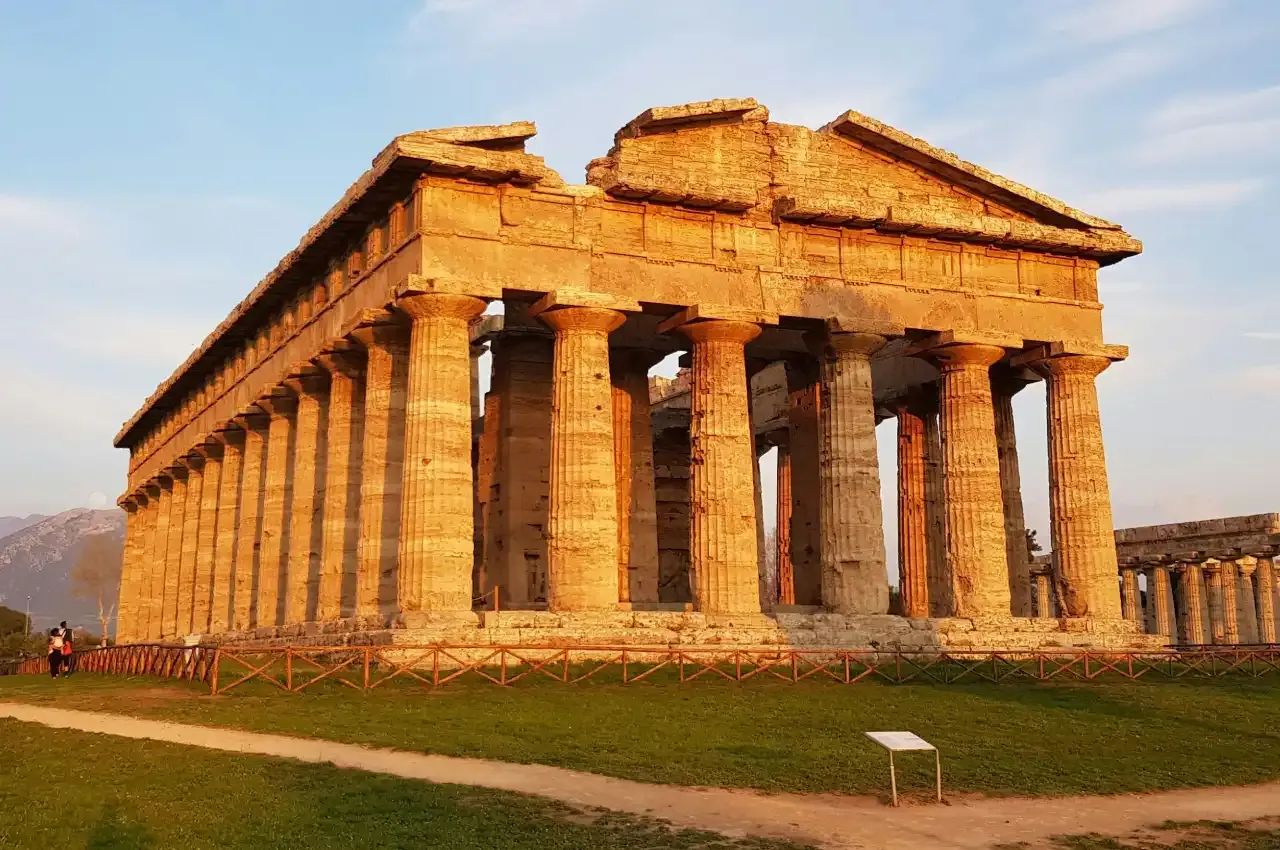
Paestum’s Greek Temples
A major Magna Graecia site in southern Italy, Paestum features three of the world’s best-preserved Doric temples. Among these architectural wonders is the Temple of Hera (often called the Basilica), which stands as a majestic tribute to the queen of the Olympian gods and highlights the extraordinary engineering skills of ancient Greek colonists.
Beyond these monumental stone structures, the site boasts a world-class archaeological museum. Its crowning jewel is the unique “Tomb of the Diver,” a masterpiece housing the only surviving Greek wall paintings from its 5th-century BC period, offering a rare, vivid glimpse into ancient concepts of life and the afterlife.