
Pompeii Entry Ticket
Discover the city buried by Vesuvius by securing your Pompeii Admission Tickets in advance. By booking online, you will avoid long queues and guarantee your entry to one of the most fascinating archaeological sites in the world. Explore temples, villas, and theaters with the peace of mind of having your access confirmed.
Enjoy Pompeii with our tickets
Plan your visit in advance
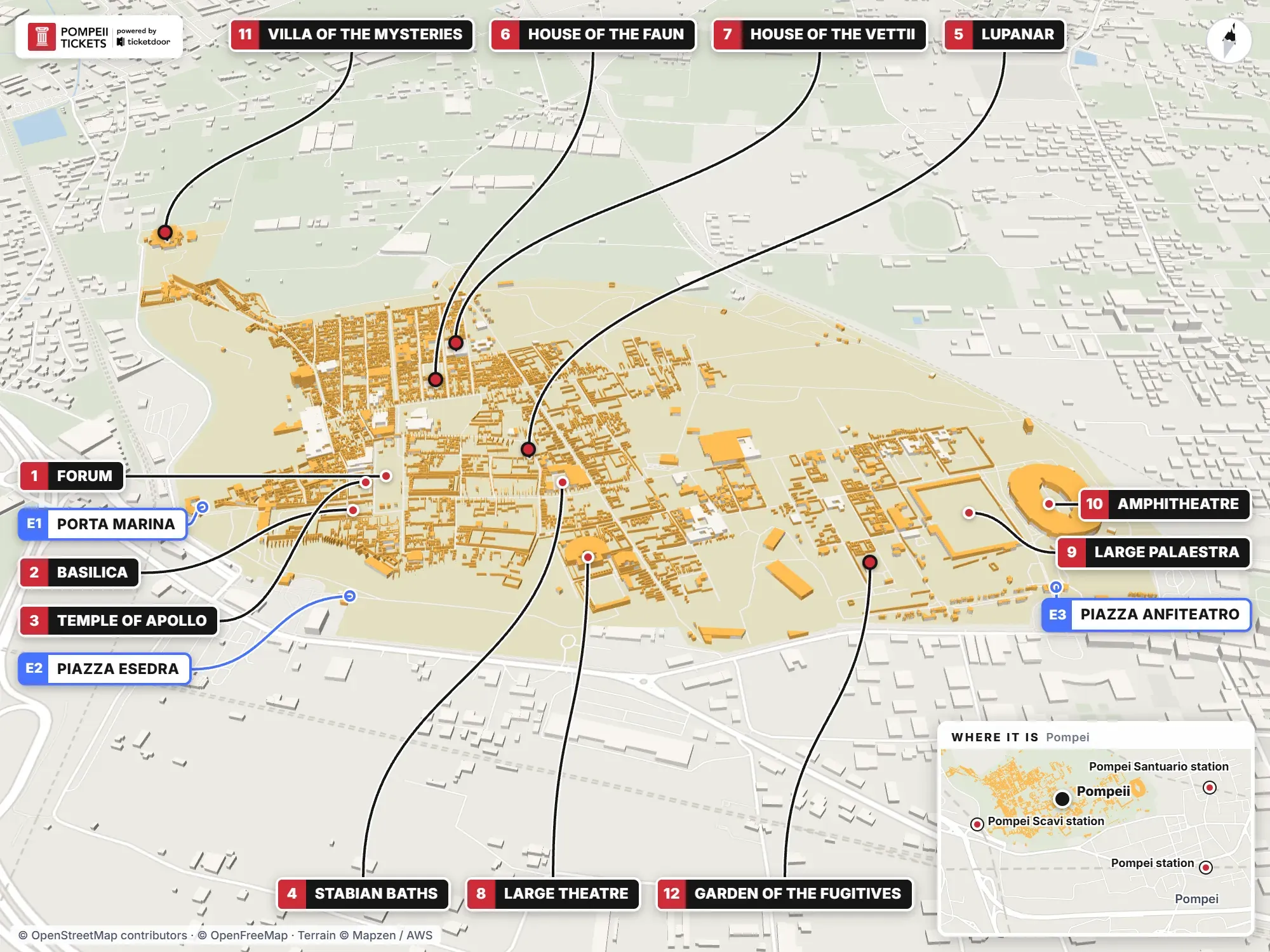
Find updated Pompeii opening hours, how to get to Pompeii, and navigate the ruins easily with the Pompeii map. The site has multiple entrances and offers useful visitor services including shuttle buses, dining areas, restrooms, and souvenir shops.
Opening hours
Pompeii opening hours vary depending on the season to provide the best visitor experience:
- From April 1st to October 31st, the site is open from 9:00 AM to 7:00 PM, with the last entry allowed at 5:30 PM.
- From November 1st to March 31st, the hours are slightly reduced from 9:00 AM to 5:00 PM, with the final admission at 3:30 PM.
Most suburban villas and secondary sites, such as Oplontis or Stabiae, follow similar schedules but remain closed on Tuesdays. It is highly recommended to check these times before planning your trip.

What can you see in Pompeii?
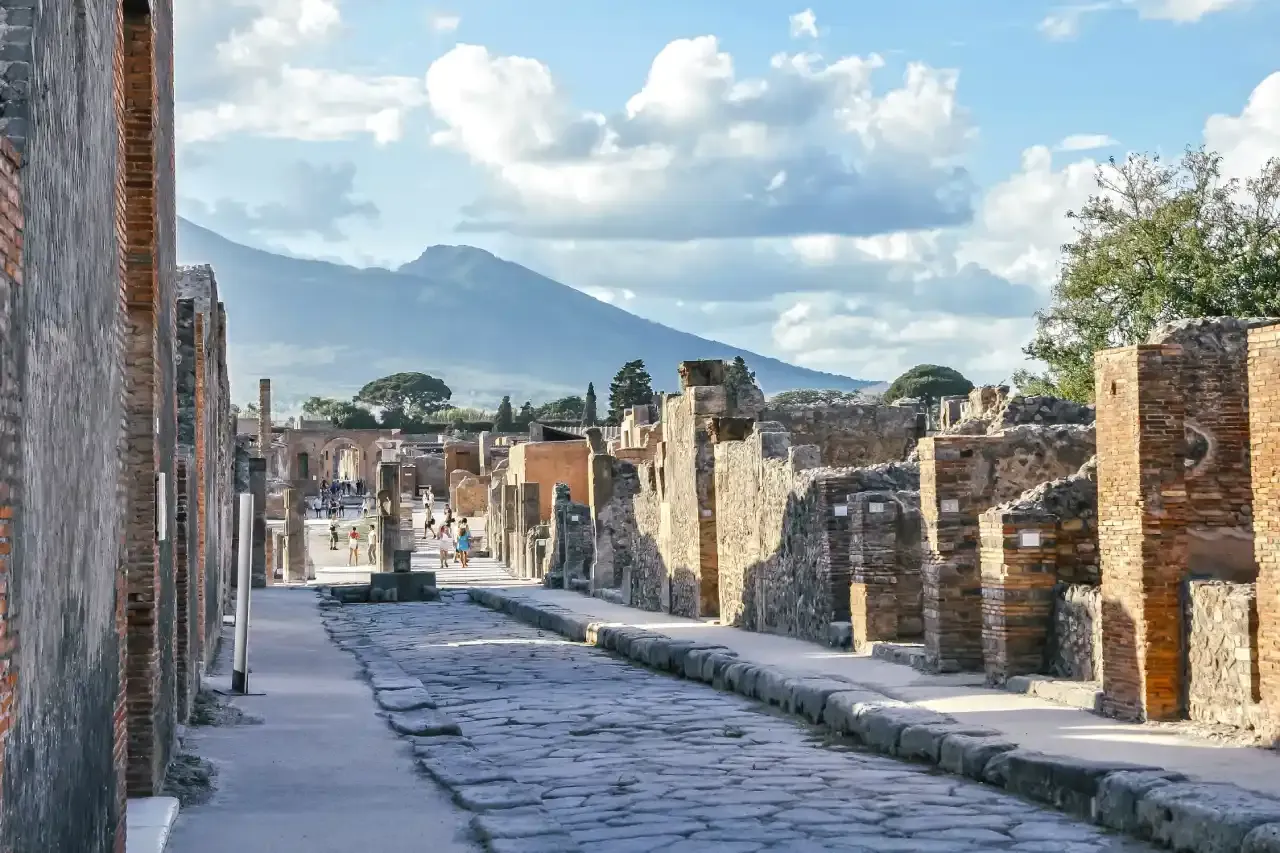
In addition to the ruins of Pompeii, several remarkable sites and villas reveal the richness of Roman life and innovation. You can visit the Antiquarium of Boscoreale, known for its vivid frescoes and artifacts. Or visit Oplontis and its luxurious Villa Poppaea, and admire the villas of Stabiae, perched above the Bay of Naples.
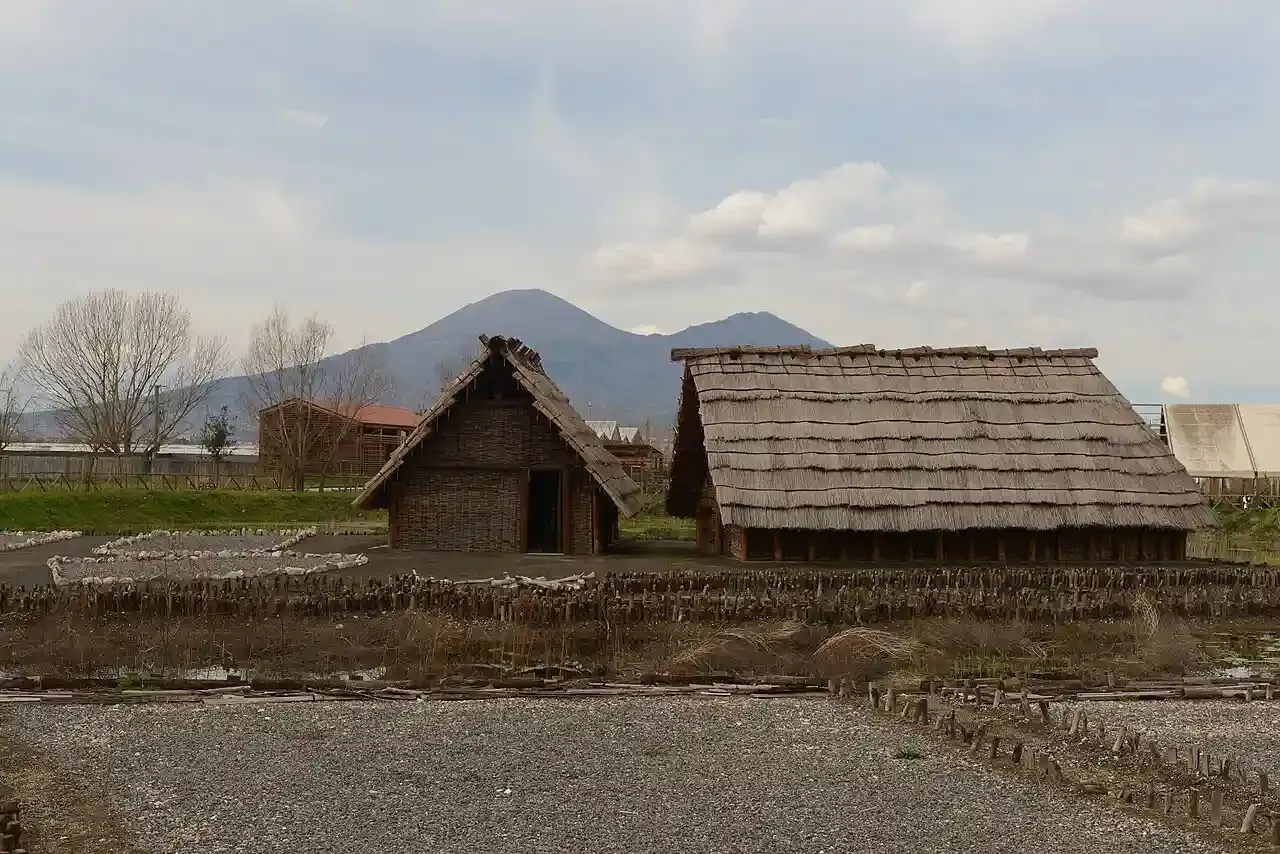
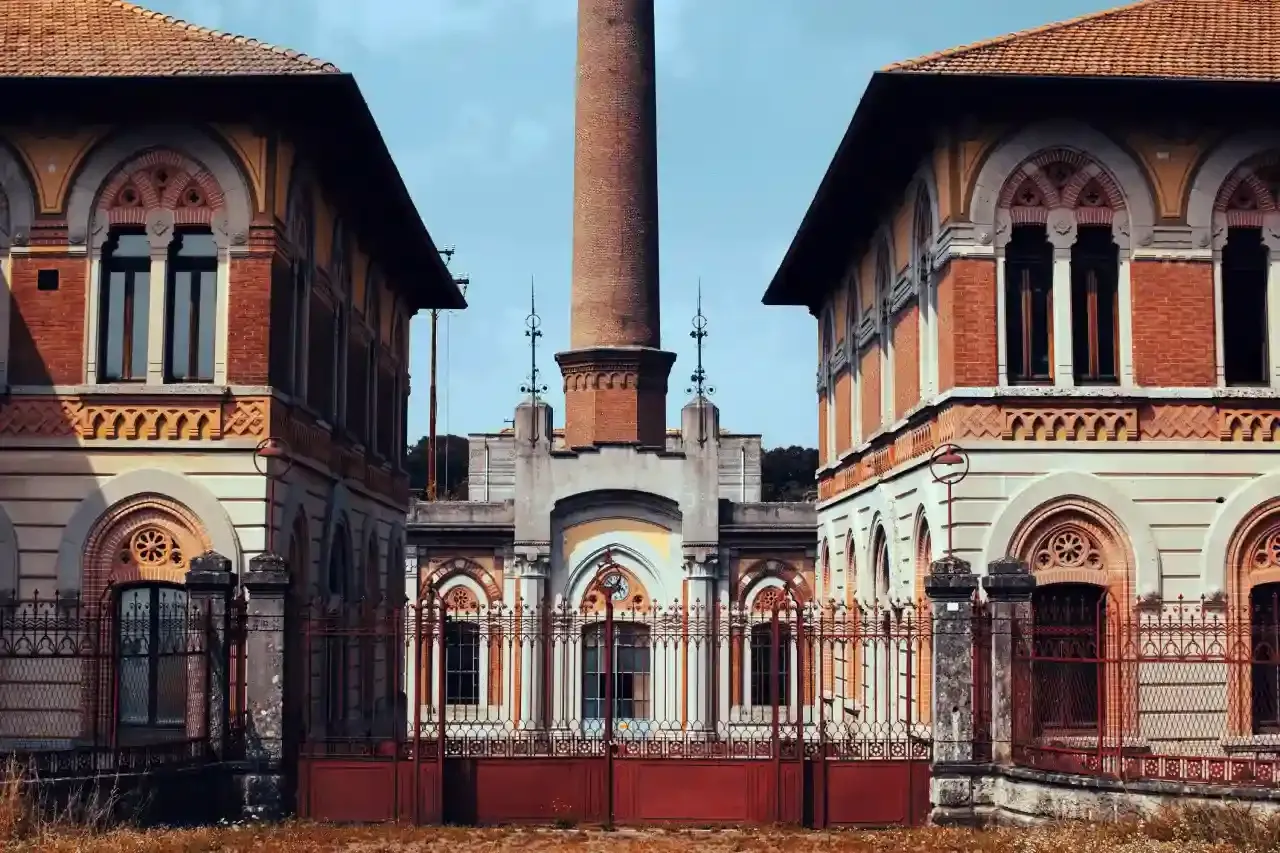
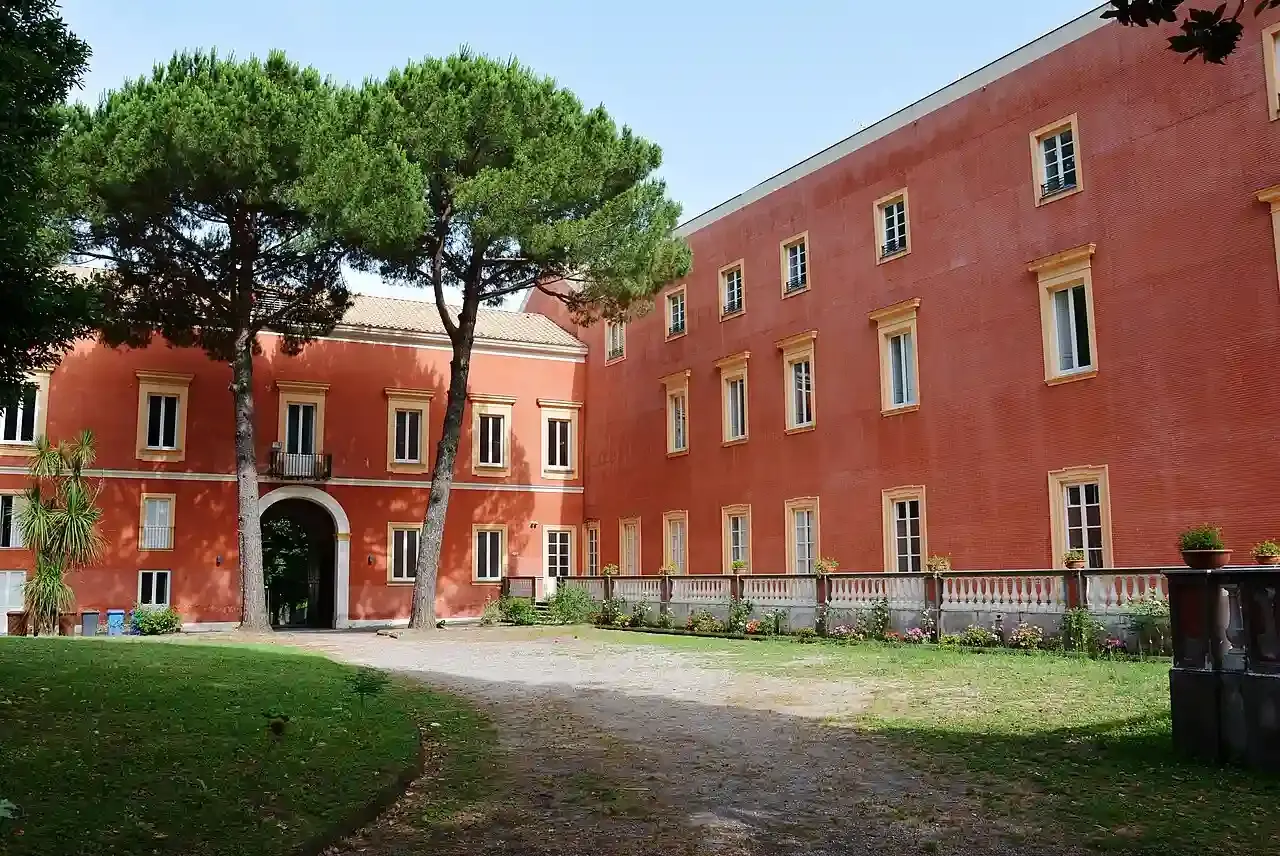
Step further back in time at Longola, a Bronze Age settlement with a unique canal system. Discover the Polverificio Borbonico, a site of industrial archaeology, and the Reggia Quisisana, a former royal residence now showcasing archaeological exhibitions.
The Forum
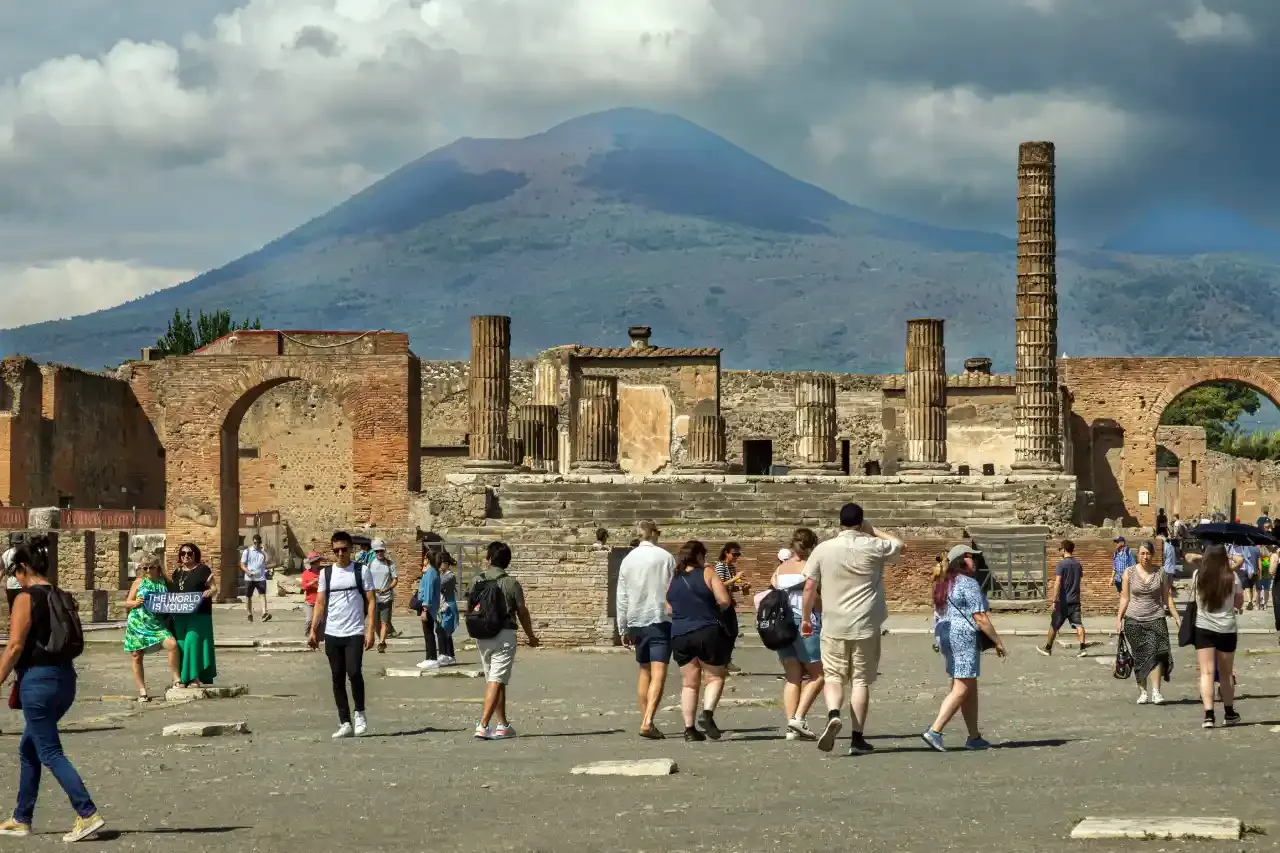
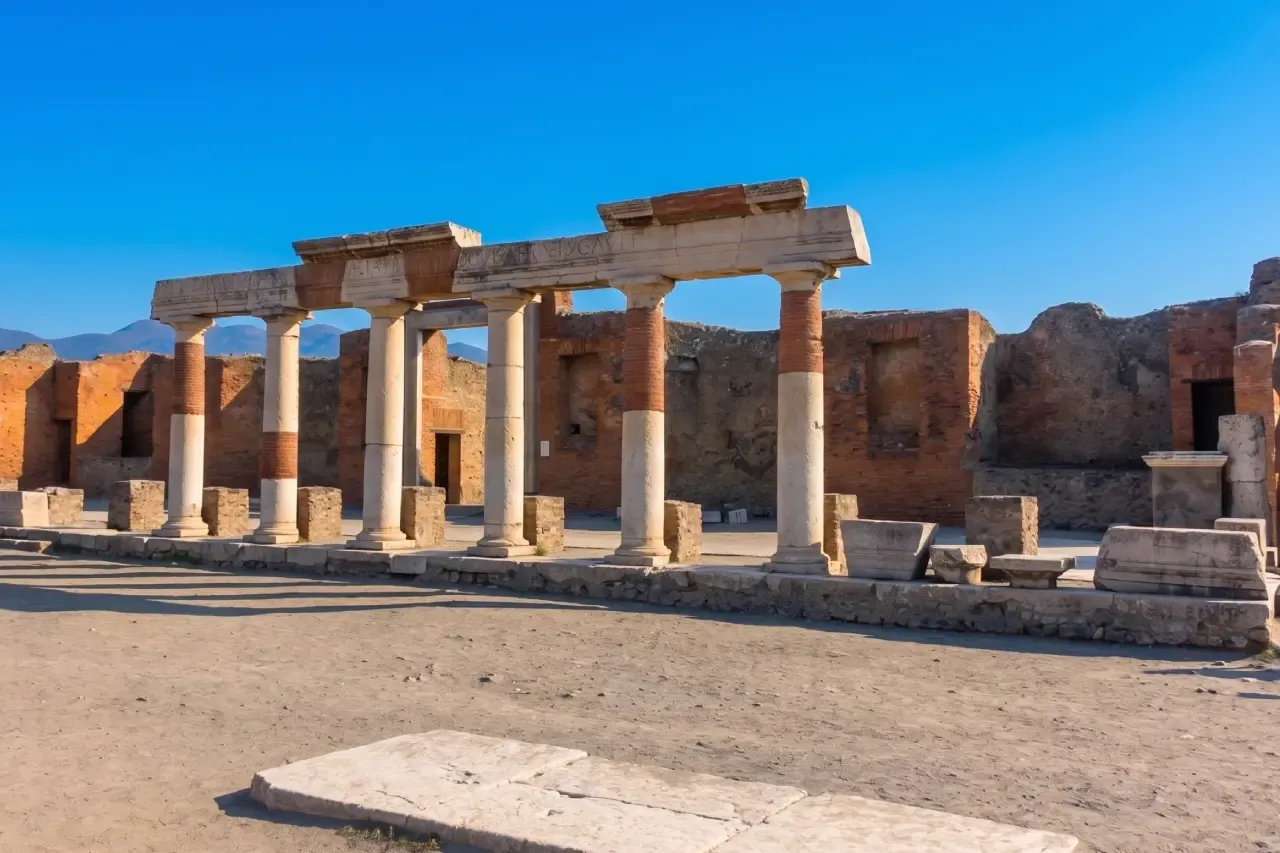
This was the civil, commercial, and religious center of Pompeii, where daily public life took place. Surrounded by monumental buildings, it offers a grand open space with breathtaking views of Mount Vesuvius in the background. It was the heart of the city, hosting markets, administration offices, and the main courts of justice.
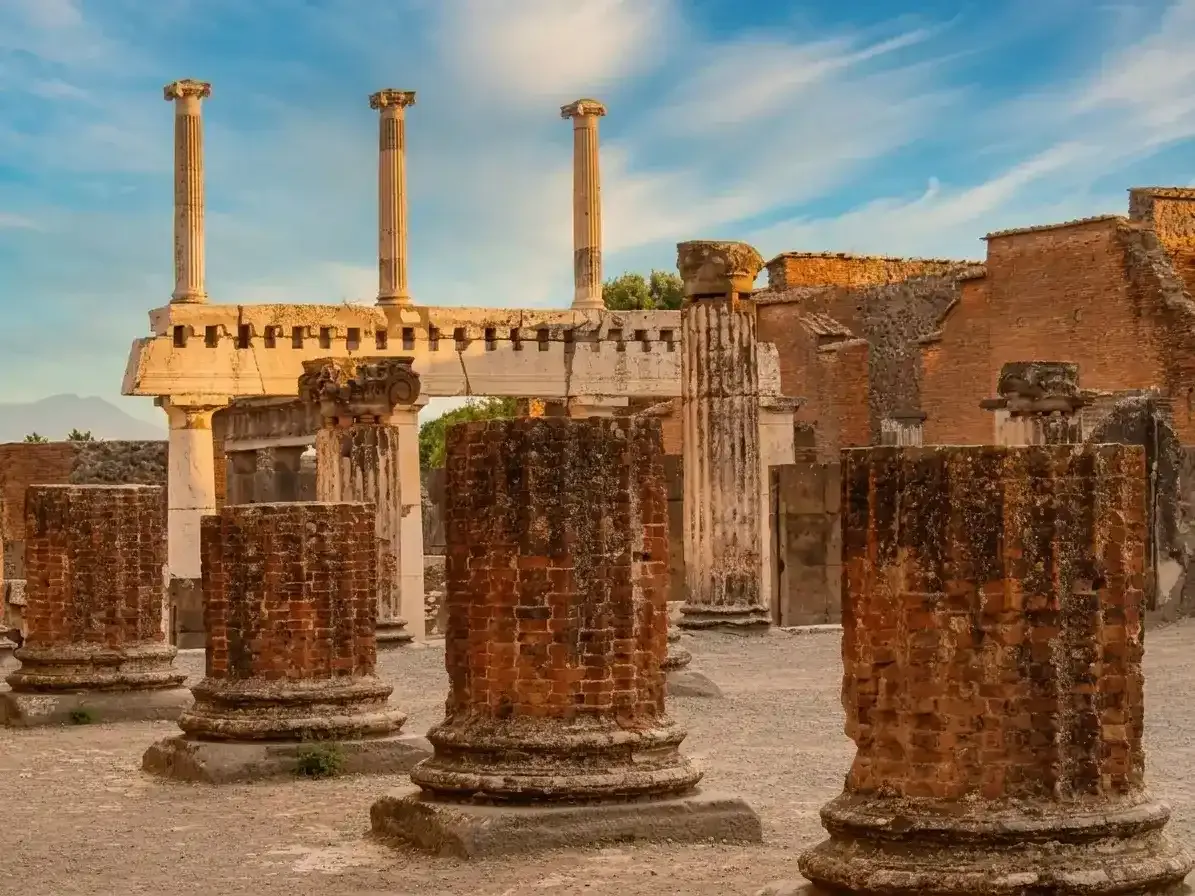
The Basilica
Located right next to the Forum, this was the most monumental building in Pompeii and served as the city's courthouse and financial center. Built in the late 2nd century BC, it is one of the oldest surviving examples of a Roman basilica in existence. Its massive interior space, once divided by heavy columns, reflects the immense judicial and economic power of the Roman Empire.
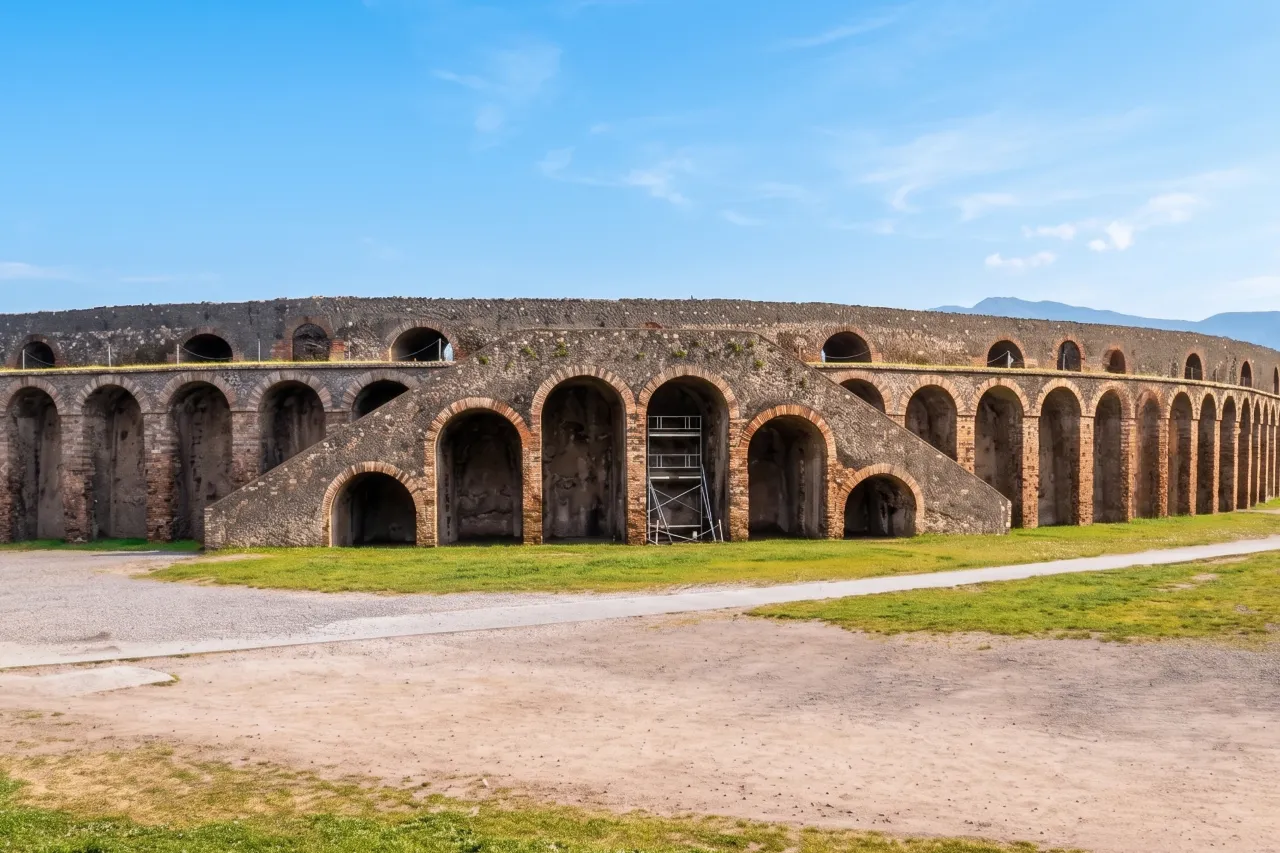
The Amphitheatre
Built around 70 BC, this is the oldest surviving Roman amphitheater in the world, predating the Colosseum by over a century. It could hold up to 20,000 spectators who gathered to watch intense and bloody gladiatorial combats. Its preservation is remarkable, allowing visitors to walk through the very tunnels the gladiators once used.
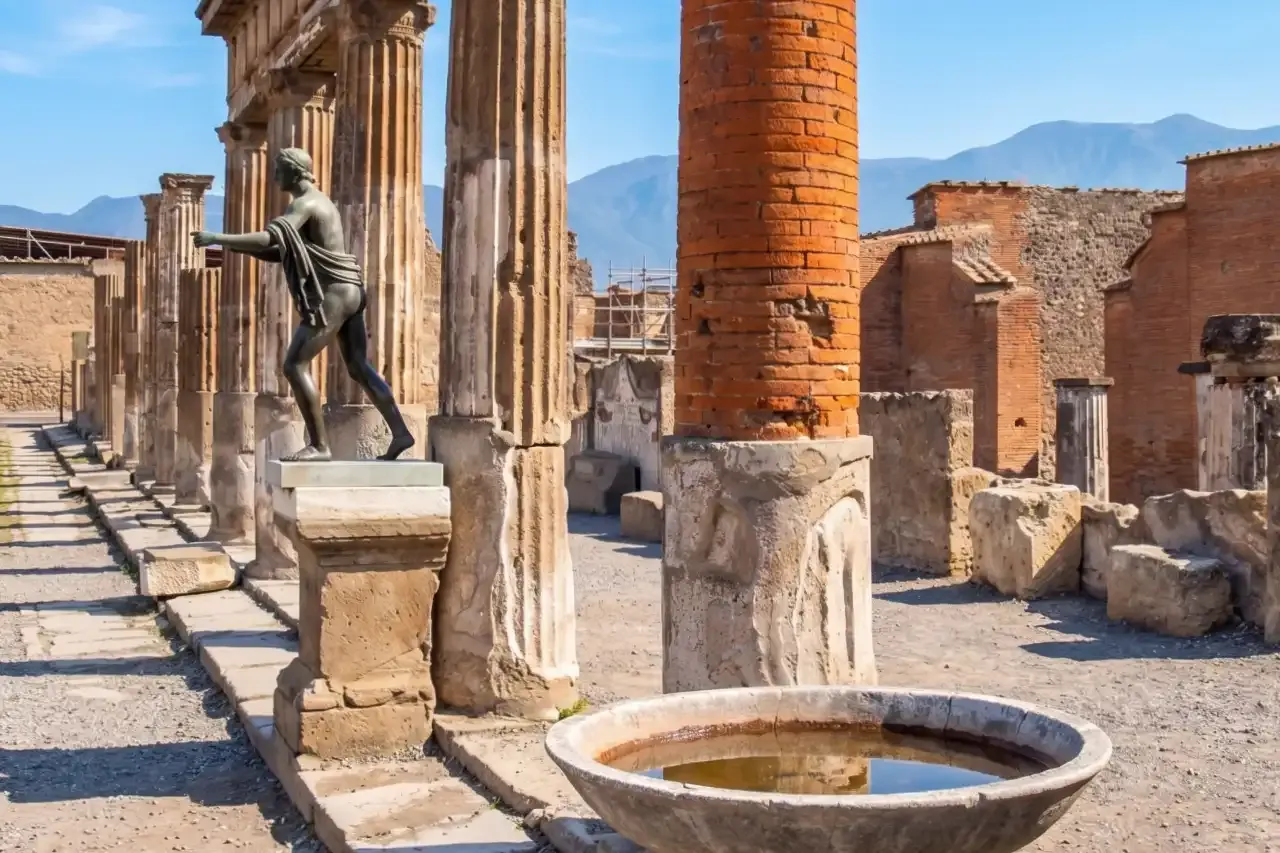
Temple of Apollo
Situated next to the Forum, this is one of the oldest and most historically significant sacred spaces in Pompeii, dating back to the 6th century BC. It perfectly blends Greek and Etruscan architectural styles, reflecting the diverse cultural influences that shaped the early city. Today, visitors can admire its elegant surrounding portico and the striking bronze statues of Apollo and Diana facing each other.
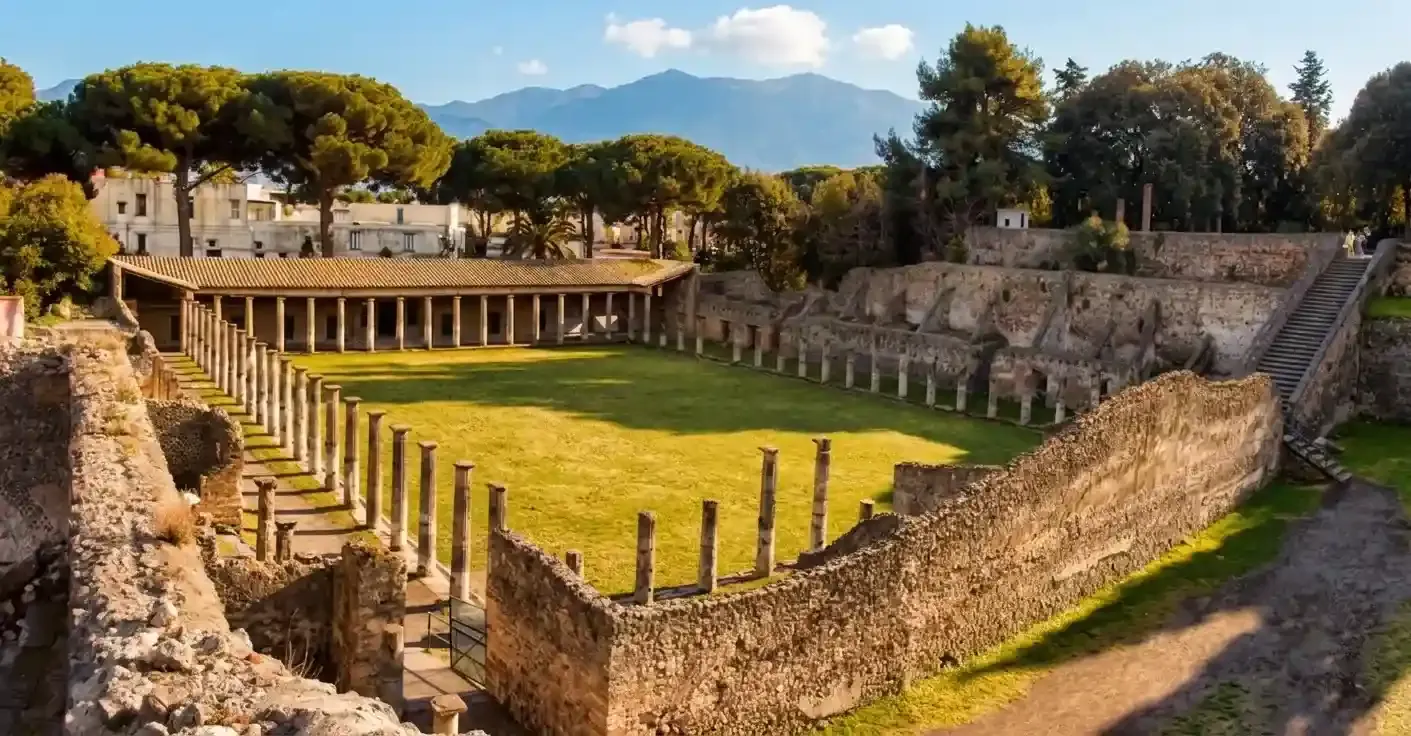
The Quadriporticus of the Theatres
Located right behind the Large Theatre, this massive open courtyard surrounded by a colonnade originally served as a foyer for theatergoers during intermissions. Following the devastating earthquake of 62 AD, the structure was completely repurposed into a barracks and training ground for gladiators. Inside its small rooms, archaeologists discovered rich armor, helmets, and even the remains of chained gladiators.
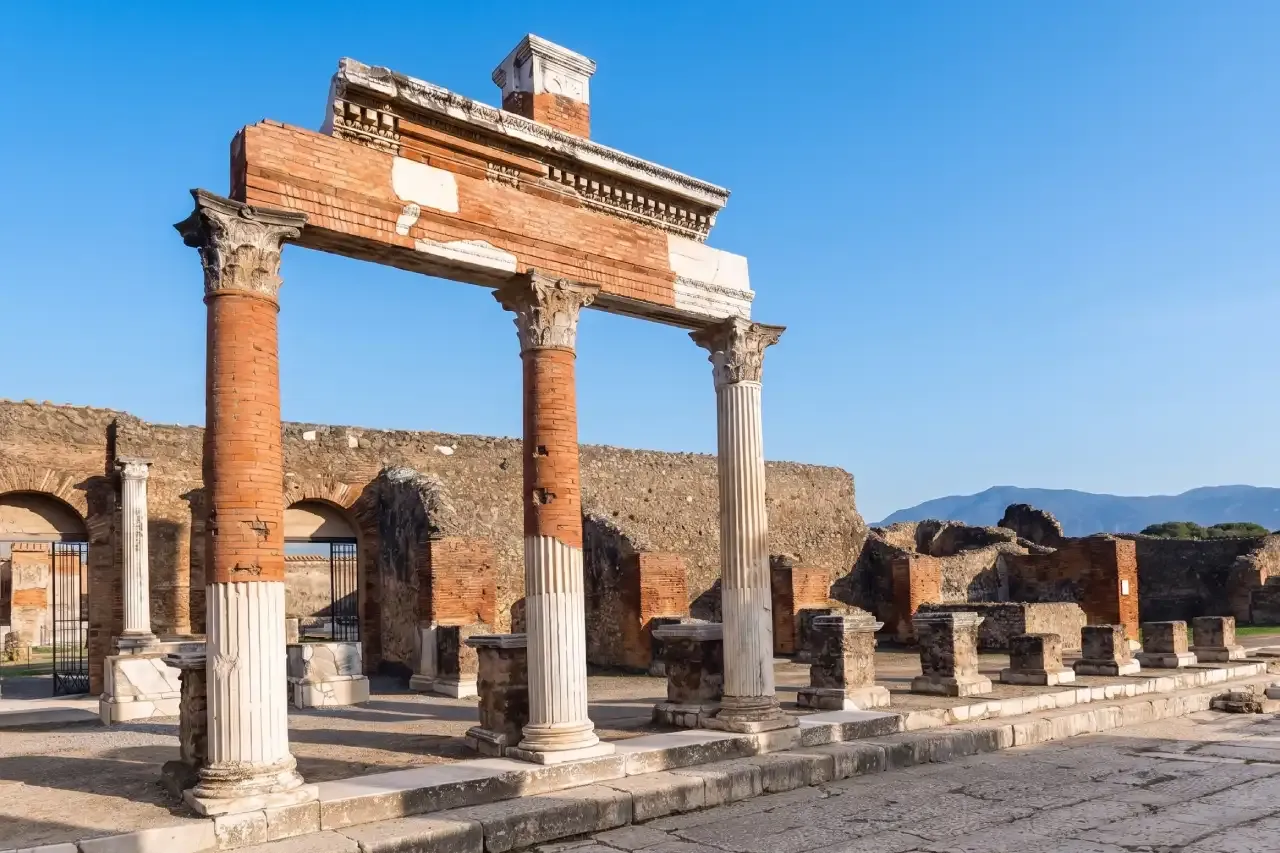
The Macellum
Positioned at the northeast corner of the Forum, this was Pompeii’s main covered market, dedicated primarily to the sale of fresh meat and fish. The center of the courtyard still features the circular base where fish was washed, scaled, and sold to the public. The walls are beautifully decorated with frescoes depicting mythological scenes and various food items that were available for purchase.
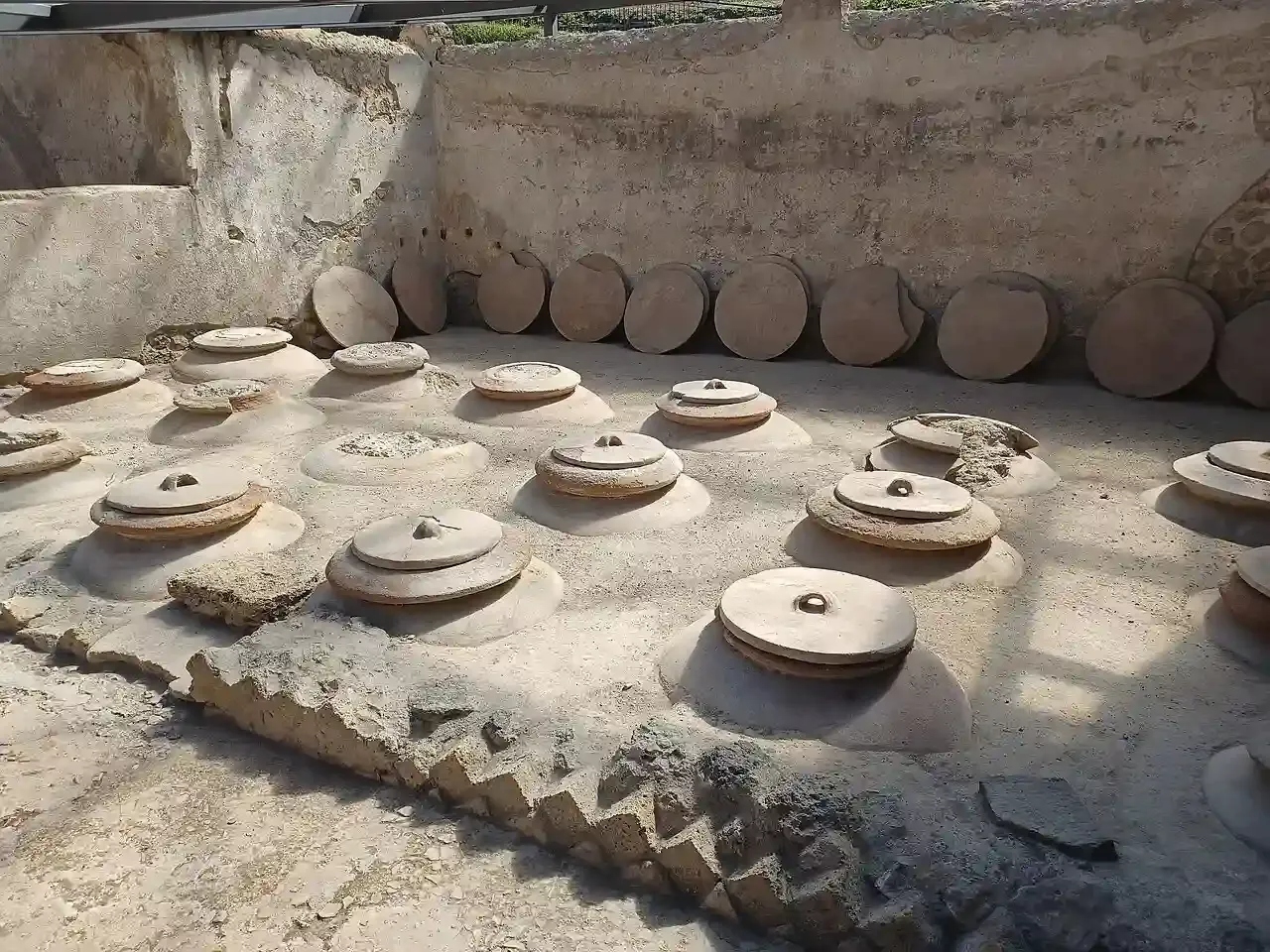
Antiquarium Boscoreale
This museum is essential for understanding the rural life and agricultural economy of the Vesuvius region before the eruption. It displays a vast collection of organic remains, tools, and objects used in daily farming and wine production. The site also includes the nearby Villa Regina, a beautifully preserved rustic Roman farm and vineyard.
Photo: “View of dolia in situ from the Villa Regina in Boscoreale, Italy” by Carla Brain.
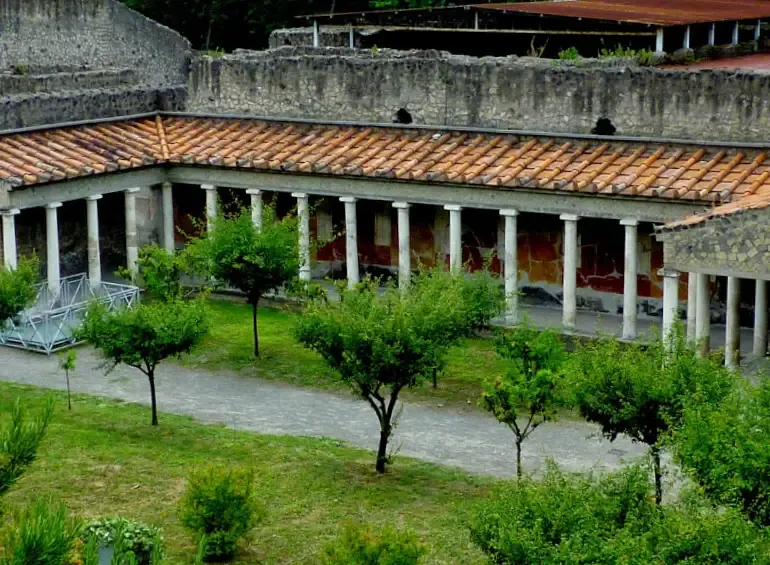
Oplontis (Villa of Poppaea)
Located in modern Torre Annunziata, this grand suburban complex is believed to have belonged to Poppaea Sabina, Emperor Nero's second wife. It is an extraordinary example of an ancient luxury villa, famous for its monumental swimming pool and stunningly preserved Second Style frescoes. The paintings create incredible optical illusions of open spaces, gardens, and grand architecture.
Photo: “Oplontis” by Ragusaibla.
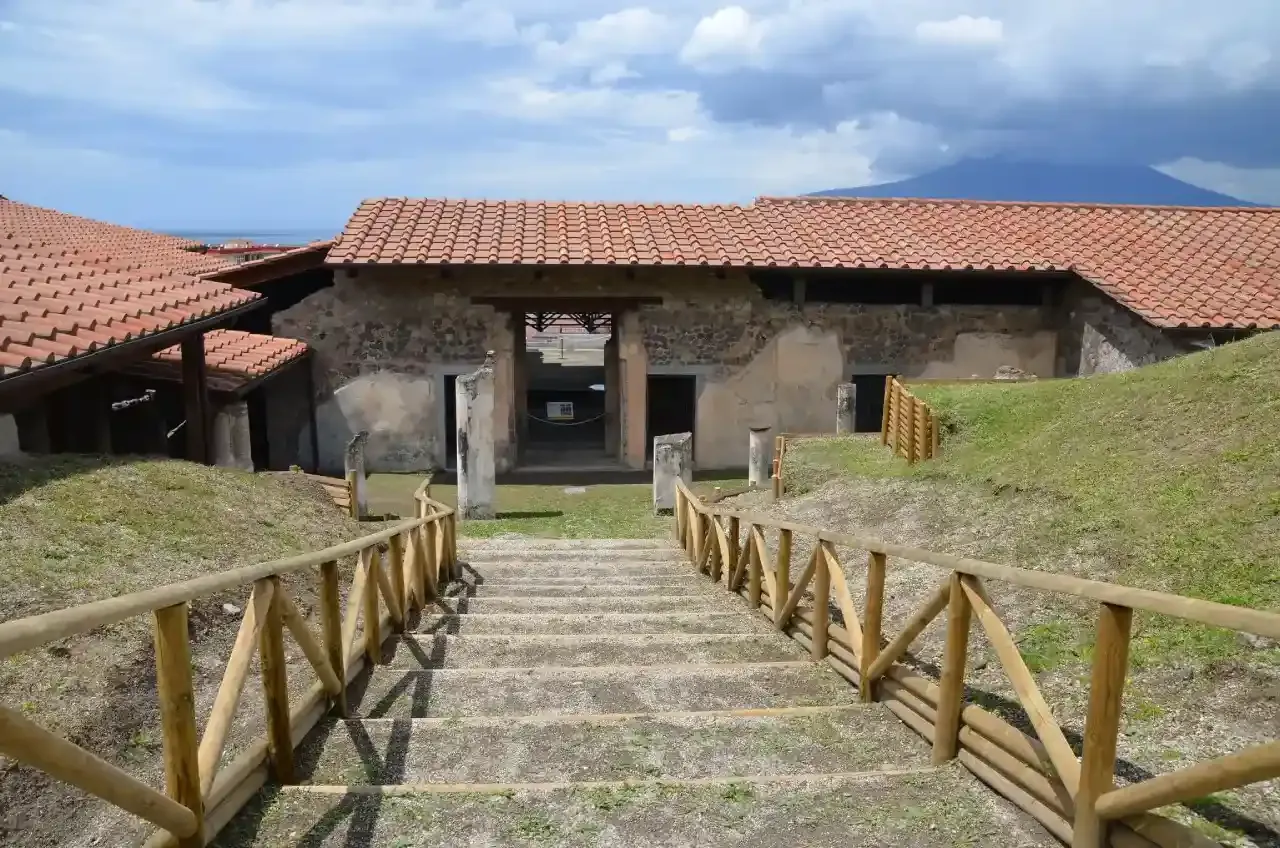
Stabiae (Villas of Castellammare)
Situated on a scenic cliff overlooking the sea, this ancient resort area was where wealthy Roman elites built massive elite residential complexes. Sites like Villa San Marco and Villa Arianna are famous for their immense size, private thermal baths, and delicate panoramic porticoes. It offers a unique glimpse into the ultimate luxury and relaxation (otium) of the Roman upper class.
Photo: “Villa Arianna, Stabiae, Italy” by Carole Raddato.
Longola
Often described as a "protohistoric Venice," this extraordinary archaeological park is an indigenous village built on artificial wooden islets during the Bronze Age. Located in the Sarno Valley, it predates Pompeii by centuries and shows how early populations managed a river-based environment. It features reconstructed peripheral pile dwellings and is famous for the discovery of ancient dugout canoes.
Photo: “Archaeological Park of the Longola Archaeo-Fluvial Site. Huts of the prehistoric village” by Ruthven.
Polverificio Borbonico
This site shifts the focus from ancient Roman times to the industrial heritage of the Kingdom of the Two Sicilies in the 19th century. Originally built as a royal gunpowder factory, this grand architectural complex utilized the local water channels for its production lines. Today, it has been restored as a cultural space and monumental venue managed by the Pompeii Archaeological Park.
Reggia di Quisisana
This historic royal palace in Castellammare di Stabia was originally built as a summer residence for the Bourbon monarchy. Today, it hosts the Libero D'Orsi Archaeological Museum, which gathers an incredible collection of masterpieces found during excavations in Stabiae. It features exceptionally preserved frescoes, statues, and luxury items that cannot be seen anywhere else.
Photo: “Reggia di Quisisana a Castellammare di Stabia” by MentNFG.