
The appropriate attire for Pompeii is functional, lightweight clothing, combined with closed-toe, supportive footwear designed for walking on uneven ancient cobblestones.
What to wear in Pompeii?
These are our recommendations for clothing and footwear for what to wear in Pompeii so that you can walk with complete freedom and explore every corner of this city frozen in time:
| Category | Summer (June - September) | Intermediate Seasons (March - May, October - November) | Winter (December - February) |
|---|---|---|---|
| Clothing | Light and breathable fabrics (linen, cotton), light colors. Loose shirts or blouses, comfortable trousers or shorts. | Layer system: T-shirt, light sweater or sweatshirt, thin jacket or windbreaker. | Thermal layers, wool sweaters, fleece, warm and waterproof coat. |
| Footwear | Trekking shoes or closed, very comfortable sports shoes with a thick sole. | Comfortable, closed-toe shoes. You may need something more water resistant. | Waterproof boots or shoes with sufficient grip. |
| Essentials | Hat or cap, sunglasses, sunscreen, refillable water bottles, umbrella, fan or handheld fan. | Water bottle, sunglasses, umbrella or waterproof jacket. | Umbrella, scarf and gloves. |
Clothing should be a matter of comfort and protection, not protocol. And if you go in the summer months, your focus should be on enduring the extreme heat. These are some of our recommendations regarding what you should wear in Pompeii:
As you can see, clothing varies greatly, but the golden rule is always the same: choose comfort to be able to walk and explore freely.
Knowing a bit about the weather will greatly help you plan the clothes you should bring to Pompeii. The region, which is near Naples, has a typical Mediterranean climate, but with particularities that directly affect your visit to the ruins, especially because it is a completely outdoor space with very few places to shelter from the sun or rain.
In general terms, summers (running from June to September) are intensely hot and very dry. During these months, temperatures can easily reach 30ºC and even exceed them, especially in July and August.
Here is an important detail: there is very little shade in Pompeii. Think of the site as a large esplanade of streets, squares, and uncovered structures, without trees or sufficient roofs to block the sunlight. Furthermore, the ancient volcanic stone used in the streets and buildings has the capacity to absorb heat all day, creating a true “oven” effect. This makes the thermal sensation considerably higher than what the thermometer reads and makes walking among the ruins more demanding than you might expect. Therefore, if your visit is during the summer, you must pay special attention to the clothes you wear, as well as protecting yourself from the sun and staying hydrated. Carrying a refillable water bottle is not just recommended, it is an absolute necessity to avoid heat stroke or dizziness.
On the other hand, winters (December to February) are mild, but noticeably more humid. Although temperatures rarely drop below 5ºC during the day, it is common to find gray periods, constant drizzles, and some cold wind. This means you will need layered clothing, a waterproof jacket, and perhaps a small umbrella. The tourist influx is lower, which can be an advantage, but the ground becomes more slippery and you must walk with more caution.
The intermediate seasons, spring (March to May) and autumn (October to November), are usually the most pleasant. The weather is temperate, the light is soft, and the visit becomes much more comfortable. Even so, unexpected showers can occur in spring, and residual heat can still be felt at noon in autumn, so it is advisable to wear versatile clothing.
In summary, no matter when you go: knowing the weather and choosing your clothes well will make a big difference in how you enjoy this fascinating archaeological site.
The good news is that if you are worried about the dress code in Pompeii, you can rest assured, because there is no official code as such. Unlike churches, cathedrals, or places of worship, where covering shoulders and knees is often required out of respect, in Pompeii you are free to dress as you wish. They will not deny you entry if you wear shorts or a sleeveless shirt. The archaeological site is designed to receive visitors from all over the world and does not require any specific requirements in this regard.
However, there is an important nuance: freedom of dress does not mean you should go without thinking. Your clothing choice will directly affect your level of comfort, especially if you visit Pompeii in summer, which is the most critical time. As we mentioned before, the heat is intense, shade is scarce, and solar radiation can be exhausting (even for those accustomed to the Mediterranean climate). Furthermore, the humidity and dust on the ground can intensify the sensation of heat, making the visit more demanding than it seems at first glance.
Therefore, remember that your clothes will help you protect yourself from the sun, avoid heat exhaustion, and allow you to walk for hours without discomfort. In fact, we must not forget that we are talking about a site where you will walk cobbled streets, climb ancient stairs, and constantly move over irregular surfaces. A poor choice of clothing or footwear can ruin the experience and make your visit much more tiring.
Now that you know how to dress for visiting Pompeii, the time has come to complete your outfit by selecting the most appropriate footwear. If there is one piece of advice you should take seriously about what footwear to wear, it is this: wear comfortable, closed-toe shoes.
You cannot forget that you are going to walk (a lot) through an ancient city with complicated terrain. Therefore, do you think nice sandals are the best option for such terrain? The answer is obvious.
The terrain in Pompeii is, by definition, difficult. You will be walking on original Roman streets, paved with large blocks of volcanic stone (the famous opus incertum). These stones are worn down by the passage of centuries, they are irregular, and they have large cracks and unevenness.
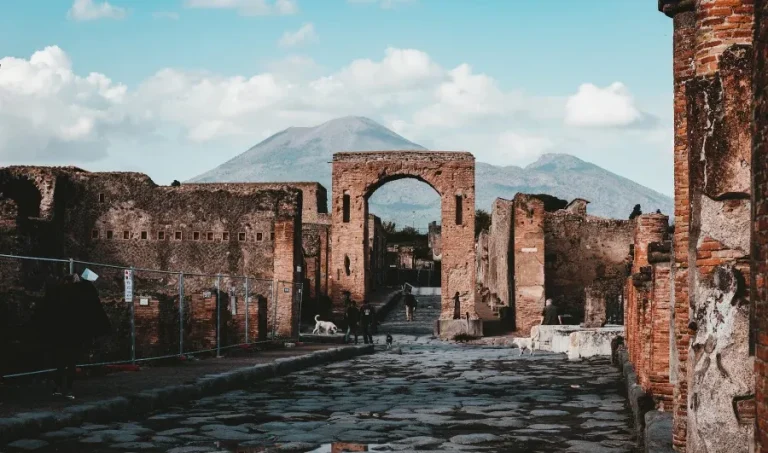
Furthermore, the sidewalks are often high and narrow, and the excavations have left many holes and uneven areas. For this reason, the footwear you wear in Pompeii must offer good ankle support, a thick, non-slip sole to prevent slipping, especially if it has rained or if you are walking in the morning dew.
Hiking shoes, light trekking shoes, running shoes, or comfortable walking shoes are, without a doubt, the best choice. Do not risk suffering a sprain or ending up with blisters. Remember that good footwear is what will allow you to enjoy every last corner without thinking about foot pain. Once again, comfort here is an absolute necessity.
In addition to clothing and footwear, there are a series of items that we consider absolutely essential to make your visit as pleasant as possible, especially with regard to combating heat, since it is the most limiting factor in Pompeii.
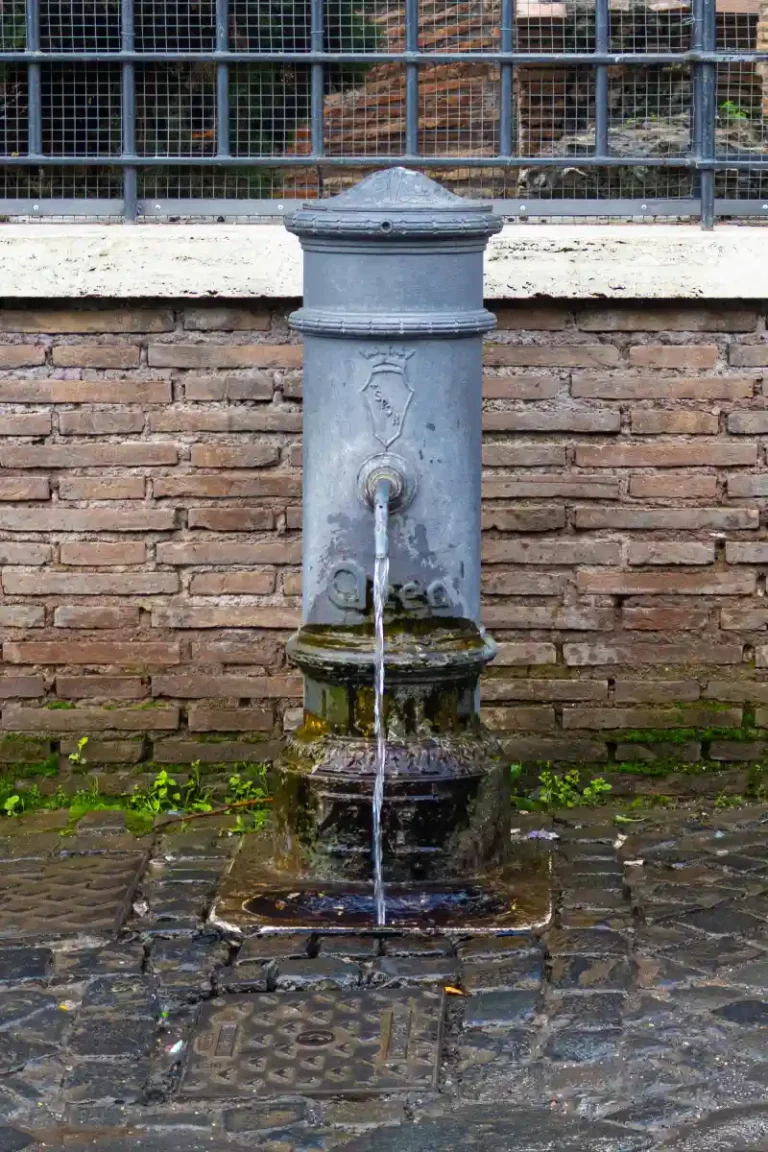
The number one item is, without a doubt, water. Bring your own reusable bottle or, even better, two. Why? Because inside Pompeii you have access to fresh and free drinking water. These points are known as “nasoni”, which are the public drinking water fountains, very common throughout Italy, that are shaped like a nose (hence their name, which means “noses” in Italian). Locate them on a map or ask for them. Constantly refilling your bottle is vital to stay hydrated, especially under intense sun.
Then there is sun protection. A good broad-spectrum, high-factor sunscreen is mandatory, as you will spend hours under direct sun and, as we mentioned before, there is not much shade in Pompeii. Our recommendation is that you apply it before entering and reapply it in the middle of the day, especially if you sweat a lot, and that you also consider bringing an umbrella with you to protect you from the sun’s rays during the hours of greatest incidence.
Good sunglasses are also essential, as the light reflected on the light stones can be very annoying for the eyes. Other objects that will save your life during your trip are a fan or a small battery-operated handheld fan. You cannot imagine how comforting a gust of air can be in the suffocating summer heat of Pompeii!
Finally, do not forget to bring a small first aid kit, with band-aids for blisters (in case the footwear fails) and some pain reliever. These small details make the difference between a memorable and an exhausting visit.
If your visit to Pompeii is in the middle of summer, a smart strategy to combat the heat is to adjust your entry time. The truth is that the worst hours to be in the ruins are from late morning, around 11:00, until mid-afternoon, near 15:00 or 16:00. This is the moment when the incidence of solar rays increases, the radiation is maximal, and the stones have absorbed all the heat, creating that “oven” effect that we mentioned in previous lines.
Therefore, for us, the best time of day to beat the heat in Pompeii is to go first thing in the morning, right when they open. The light is beautiful, it is less hot, and you also avoid the large crowds of tourists.
You can also go late in the afternoon, about three hours before they close. At this time, the temperature begins to drop a little and the golden light of the sunset over the ruins is spectacular for photos.
If you can only go at noon, be sure to take frequent breaks, dress appropriately (following our previous recommendations) and stay constantly hydrated.
Finally, although we have already mentioned that there is no dress code in Pompeii, there is one aspect that is important to keep in mind: respect for the place you are visiting. Think that Pompeii is not only a historical place, it is the site of an immense human tragedy, a city where thousands of people died buried by the eruption of Vesuvius in 79 AD. Furthermore, the excavations have revealed the remains and molds of those bodies in their final positions, a very shocking reminder of the catastrophe.
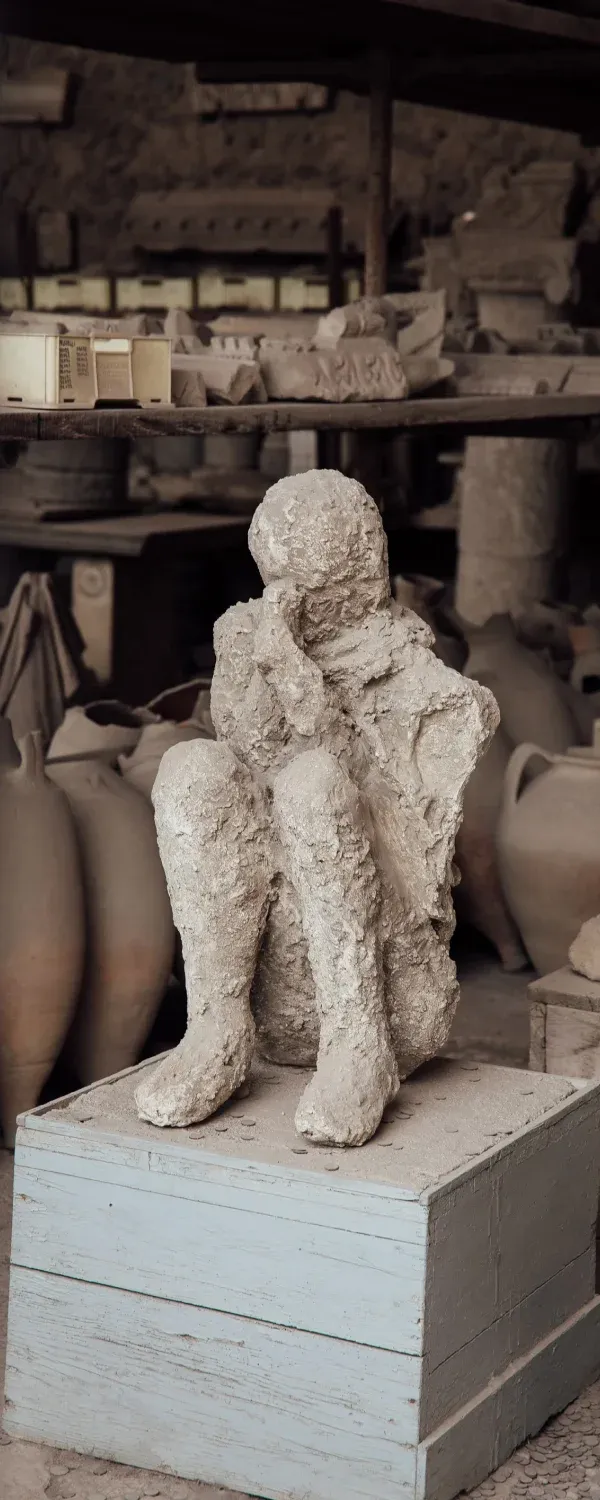
Therefore, it is advisable that you opt for sensitivity and avoid clothing with prints or messages that may be considered disrespectful, offensive, or in poor taste. This includes, of course, anything related to the tragedy itself or to overly controversial topics. In general, a discreet, comfortable, and practical outfit is the best way to show respect for the historical and human significance of the site.
Although the last great eruption that destroyed Pompeii was centuries ago, the region is still geologically active, and Vesuvius had a much more recent eruption, in 1944, which also caused casualties. Specifically, it happened in March 1944, in the middle of World War II, with Allied troops in southern Italy. Although it was not of the magnitude of the ancient eruption, it was intense enough to completely destroy the towns of San Sebastiano al Vesuvio and Massa di Somma, in addition to damaging a part of San Giorgio Cremano.
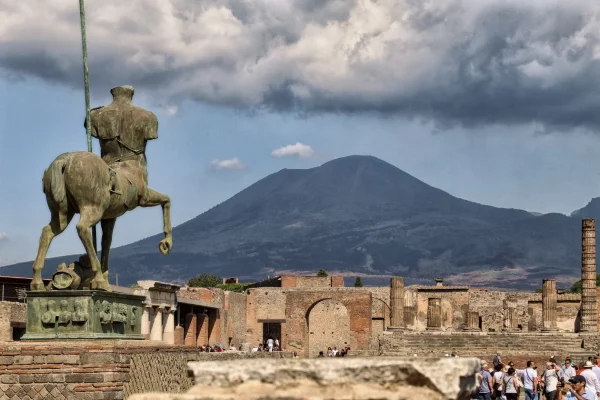
So, in summary, dress casually, but respectfully, with the maturity and consideration required by such a moving place with so much background history. Do not forget that visiting Pompeii is to be, literally, under the watchful eye of a volcano that has demonstrated its destructive power recurrently, and the people who live at its feet know it. The area is a high-risk zone, with hundreds of thousands of people living very close to the crater.
Dressing simply and sensitively is a small gesture of respect towards a site with a history that even today, in the 21st century, is still marked by the power of Vesuvius.
POMPEII TICKETS
TOURIST INFORMATION
POMPEII INFORMATION
The Pompeii historical site offers a unique glimpse into the life of an ancient Roman city, preserved through time by the volcanic ash… see more


